Minimum order $50 Cad Sorry No Shipping to other countries as of yet.
Your cart is currently empty
Product image slideshow Items
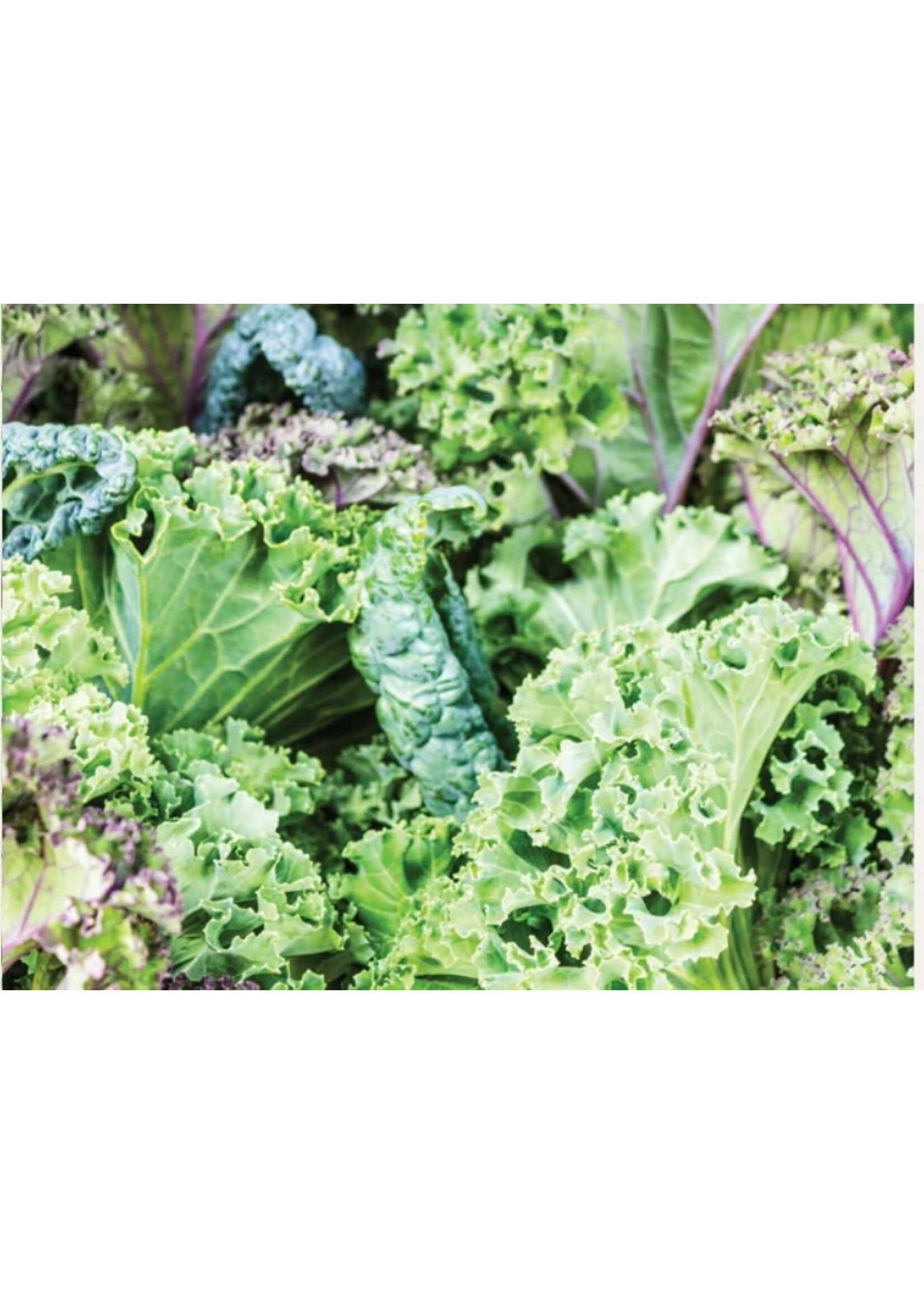
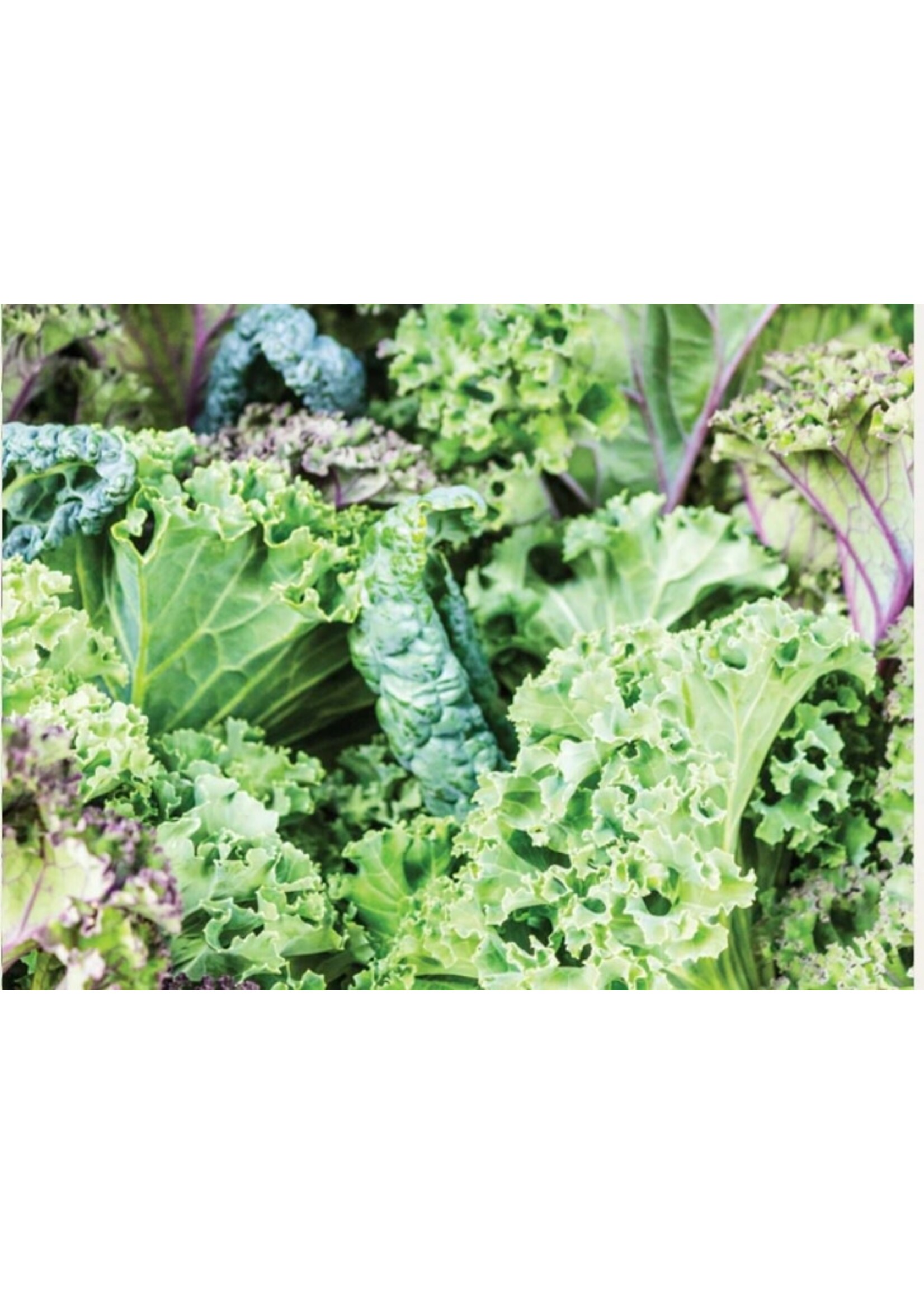
Our Summer Kale Blend is a diverse mix of leaf shapes and contrasting colours grown for baby leaves to be eaten fresh or lightly cooked.
A selection of kale varieties that thrive in the warmth of summer. Summer Kale Blend is a diverse mix of leaf shapes and contrasting colours in greens and purples. Sow short rows at three-week intervals and harvest regularly for a continuous supply of baby greens, Grow in full sun to partial shade, in garden beds or patio containers. Enjoy tender baby leaf kale in salads and wraps or chop into soups for added nutrition.
Latin
Brassica oleracea var. acephala
Family: Brassicaceae
Difficulty
Easy
Season & Zone
Season: Cool season
Exposure: Full sun
Zone: Winter hardy to Zone 6.
Timing
Direct sow in early spring to mid-summer for summer to winter harvests. Or start indoors 4-6 weeks before the last frost, and transplant out as soon as the soil warms up. Optimal soil temperature: 10-30°C (50-85°F). Seeds should germinate in 7-10 days.
Starting
Sow 3-4 seeds 5mm (¼”) deep in each spot you where a plant is to grow. Thin to the strongest plant. Space 45-60cm (18-24″) apart in rows 75-90cm (30-36″) apart.
Growing
Ideal pH: 6.0-6.8. Add lime to the bed 3 weeks prior to sowing. Kale likes well-drained, fertile soil high in organic matter. This plant prefers plentiful, consistent moisture. Drought is tolerable, but quality and flavor of leaves can suffer. Mix ¼ cup of complete organic fertilizer into the soil beneath each transplant, or use 1 cup beneath every 3m (10′) of seed furrow.
Harvest
Kale and collards can both be grown as a cut and come again crop for salad mixes by direct-seeding and cutting baby leaves. They will re-grow if you pick leaves from the bottom up, as you need them. Continue harvesting lower leaves as they mature—plants will keep producing all season. Kale can overwinter in many areas. In fact, the leaves get sweeter after frost, though growth will slow. In spring, the surviving plants start to flower, so eat the delicious flowering steps and buds.
Diseases & Pests
Protect from cabbage moths and other insect pests with floating row cover. Prevent disease with a strict 4-year crop rotation, avoiding planting Brassicas in the same spot more than once every four years.
Companion Planting